Grit · 6 min read
Why Checklists Work — Even for Kids
By Kid2Great · Published
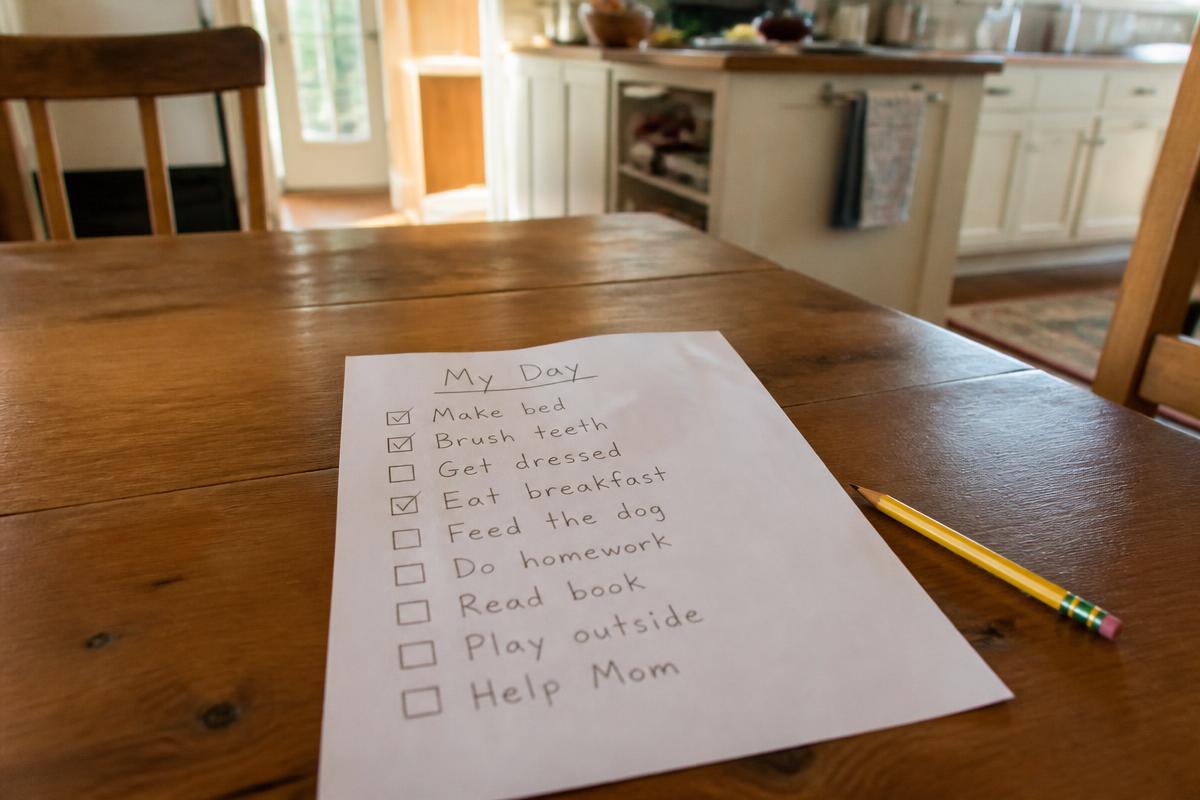
A checklist is not the most exciting thing you will ever hand your child. It has no story, no gems, no confetti. It is a list, on a page, with boxes. And it may be the single highest-return habit you can teach them before they turn twelve.
"Isn't this a bit joyless for a kid?"
It's a fair objection, and most parents feel some version of it. Childhood should be loose and imaginative. Kids should not be running a personal productivity system at age nine. Handing a seven-year-old a checklist can feel like handing them a spreadsheet and a deadline.
But look at who actually uses checklists. Airline pilots run one before every single take-off, no matter how many thousands of hours they've flown. Surgeons run one before the first cut. Nuclear engineers, construction leads, chefs in serious kitchens, astronauts, emergency room teams. These are not unimaginative people doing simple work. They are highly trained experts doing complex work — and the checklist is precisely what frees their attention for the parts that need judgement.
A checklist doesn't replace thinking. It protects it.
What The Checklist Manifesto actually says
Atul Gawande, a surgeon and writer, published The Checklist Manifesto: How to Get Things Right in 2009 after watching preventable failures happen in operating theatres staffed by brilliant people. His conclusion is uncomfortable and useful. A few of its key ideas, translated for family life:
Most failures are failures of application, not knowledge
Gawande distinguishes errors of ignorance (we didn't know) from errors of ineptitude (we knew, and didn't apply it). Your kid knows they should pack their bag. They know they should read for twenty minutes. Almost nothing about their day fails because of missing information.
Complexity outruns memory
Modern jobs — and modern childhoods — have too many moving parts to hold in working memory, especially under stress or tiredness. A checklist externalises the routine steps so the brain can spend itself on the hard, interesting, non-routine part.
Good checklists are short, precise and brutal
Gawande's rule of thumb: five to nine items, one page, plain language, and only the steps that are actually skipped. A checklist that lists everything gets ignored. Cut anything your kid never forgets.
Pause points beat continuous monitoring
Pilots don't check constantly — they stop at defined moments: before start, before take-off, before landing. Kids do best with the same structure: before school, after school, before bed.
Checklists make teams speak up
In the WHO surgical checklist Gawande helped build, one step is simply everyone in the room saying their name and role. It sounds trivial; it measurably reduced deaths, because people who have spoken once are far more likely to speak again when something looks wrong. The family version: a daily moment where a child is expected to say what didn't get done.
The results were not small
Across eight hospitals worldwide, the two-minute surgical checklist cut major complications by roughly a third and deaths by nearly half. Two minutes. Not new technology, not more talent — just a page that made sure known steps actually happened.
What this gives a child that nagging doesn't
Here's the part parents feel almost immediately. Without a checklist, the person holding the list of everything that must happen is you. Every morning you become the reminder system — bag, teeth, water bottle, homework, shoes — and your child becomes a passenger in their own routine. The list lives in your head, so the responsibility does too.
Give the list to the child and the relationship changes. The checklist becomes the thing that asks, not you. "Is your checklist done?" is a very different sentence from "Have you brushed your teeth, and did you pack your reading book, and where are your shoes?" One builds independence. The other builds an argument.
It also gives kids something they rarely get: visible evidence of their own reliability. Ticked boxes are proof. On a hard day, proof matters more than praise.
Pair it with one SMART goal a day
A checklist handles the routine. A goal handles the growth. The two do different jobs, and kids need both.
The problem with most kid goals is that they're wishes. "Get better at maths." "Be nicer to my brother." "Practise more." None of those can be finished, so none of them can be won. SMART goals fix that:
- Specific — which skill, exactly? Not "football" but "weak-foot passes."
- Measurable — how many? Twenty passes. Ten spellings. Two pages.
- Achievable — could they do it on a tired Tuesday? If not, halve it.
- Relevant — does it connect to something they actually care about?
- Time-bound — by when? "Before dinner" is a deadline a nine-year-old can feel.
So "practise more" becomes: I will do twenty weak-foot passes against the garage wall before dinner tonight. That's a goal a child can finish, tick, and be proud of — today, not someday. Do that three hundred times a year and you have something no motivational poster can produce.
Five rules for a checklist kids will actually use
- Keep it to one page and under about nine items per block.
- Only list what actually gets forgotten. Delete the rest.
- Use pause points — morning, after school, bedtime — not all day.
- Let the child do the ticking. It's their list, not your audit.
- Review it weekly and cut one item. Checklists rot when they grow.
Keep going
Checklists build the habit; mindset keeps it alive on the days it fails. Read The Power of Yet for what to say when a box stays empty, or start the evening with the free gratitude journal.