Nature Walks With Kids: A 20-Minute Ritual That Calms Everyone
Nobody in your house is asking for a walk. That's fine — the walk isn't for the enthusiasm, it's for what happens twelve minutes in, when the complaining stops and your kid starts telling you something they'd never say across a kitchen table.
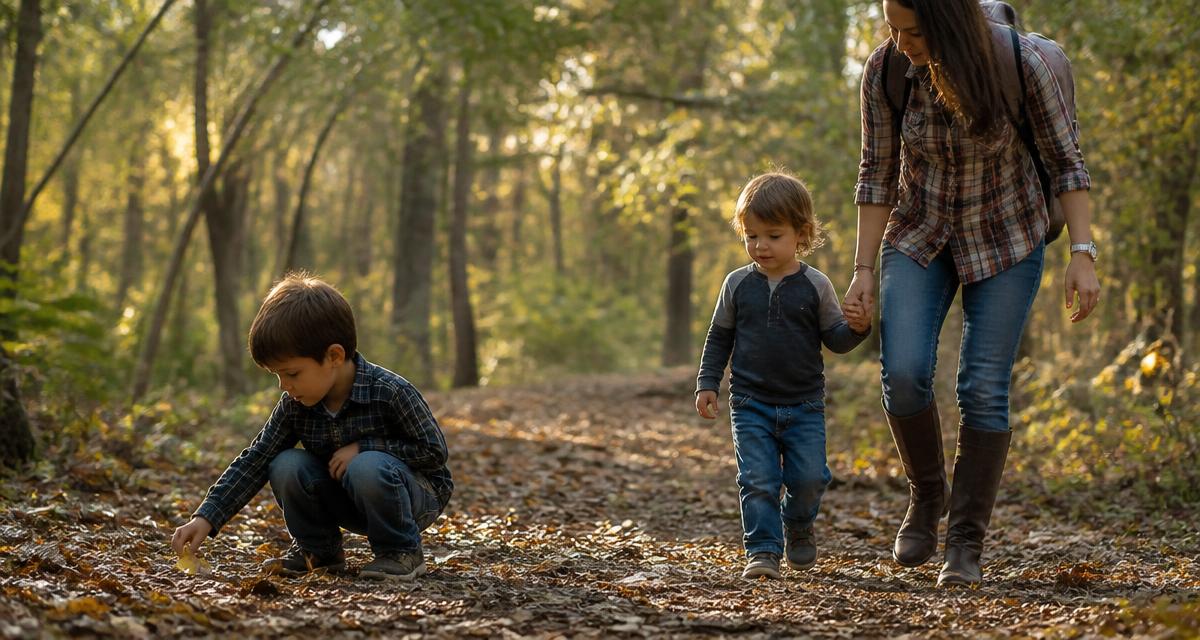
Why walking works better than talking
Side-by-side beats face-to-face. Eye contact raises the stakes of a conversation; walking lowers them. There's somewhere else to look, the silences don't feel like failures, and a child who shrugs at "how was school?" will often narrate the whole thing unprompted at minute fourteen.
Add outdoors to that and you get the second effect: attention recovers. Time outside is consistently linked to lower stress and steadier focus in children — which is why the benefit usually shows up in the hour after the walk, at homework time, rather than during it.
The 20-minute ritual
Minutes 1–5: no questions
Resist the interview. Let the first five minutes be legs and weather. Most parents blow the walk in the first ninety seconds by asking three questions in a row.
Minutes 5–15: one job
Give the walk a task. Five different leaf shapes. Three sounds with eyes closed. One thing that wasn't here last week. The job is not the point — it's the excuse for attention, and attention is what makes a child start talking.
Minutes 15–20: the three prompts
- "What's the best thing you saw today — not on a screen?"
- "What was hard today, and what did you do about it?"
- "Who had a rough day today besides you?"
That third one does more than it looks like. Noticing someone else's day is where gratitude and kindness actually start — not in a worksheet.
What to skip
- Turning it into a lesson. The moment a walk becomes a botany quiz, it becomes school.
- Your phone in your hand. Kids read that as "this is the backup activity."
- Driving somewhere scenic. A great walk you do twice a year loses to a boring one you do three times a week.
Make it stick
Attach the walk to something that already happens — after dinner, before bath, straight off the bus. Habits survive on being attached, not on being enjoyed. Our daily checklist has a line for it, and the printable affirmation cards include a full nature set your child can read on the way out the door.
Common questions about nature walks with kids
How long should a nature walk with kids be?
Twenty minutes is the sweet spot for most children under ten. Long enough for the fidgeting to settle and the talking to start, short enough that nobody has to be carried home. If it's going well, keep walking — but plan for twenty.
What if my child says walks are boring?
Boring usually means aimless. Give the walk one small job: find five different leaf shapes, listen for three sounds, or photograph one thing nobody else would notice. A job turns a walk into a hunt.
What age is best to start nature walks?
Any age. Toddlers need a hundred metres and a lot of stopping; six-to-ten-year-olds are the golden window for collecting and questions; teenagers will walk if you stop asking questions and just walk beside them.
Do nature walks really help kids' mood and focus?
Time outdoors is consistently associated with lower stress and better attention in children, and unstructured outdoor play is recommended by paediatric bodies for exactly that reason. You'll usually notice it in the hour after, not during.
How do we keep the habit going in bad weather?
Shrink it rather than skip it. Ten minutes around the block in rain gear still counts, and kids remember the odd weather walks longest. Keep boots and a jacket by the door so the decision takes three seconds.