Raising a Lifelong Learner: Curiosity Habits That Beat Grades
Four-year-olds ask questions constantly. Fourteen-year-olds mostly don't. Somewhere in between, most kids learn that questions are risky, answers are for tests, and being wrong is a status problem. None of that is inevitable — and almost all of it is set at home.
The thing school can't teach
School is very good at delivering content and quite bad at protecting curiosity, because curiosity is slow and the timetable isn't. That part is a home job. A child who leaves school still wanting to know things will out-learn a child who left with better marks and no appetite, and the gap widens every decade after.
Five habits that build a learner
1. Answer the question, or find out together
"I don't know — let's look" is the single most valuable sentence in this article. It shows a child that not knowing is a starting point, not an embarrassment, and that adults do it too.
2. Let them take something apart
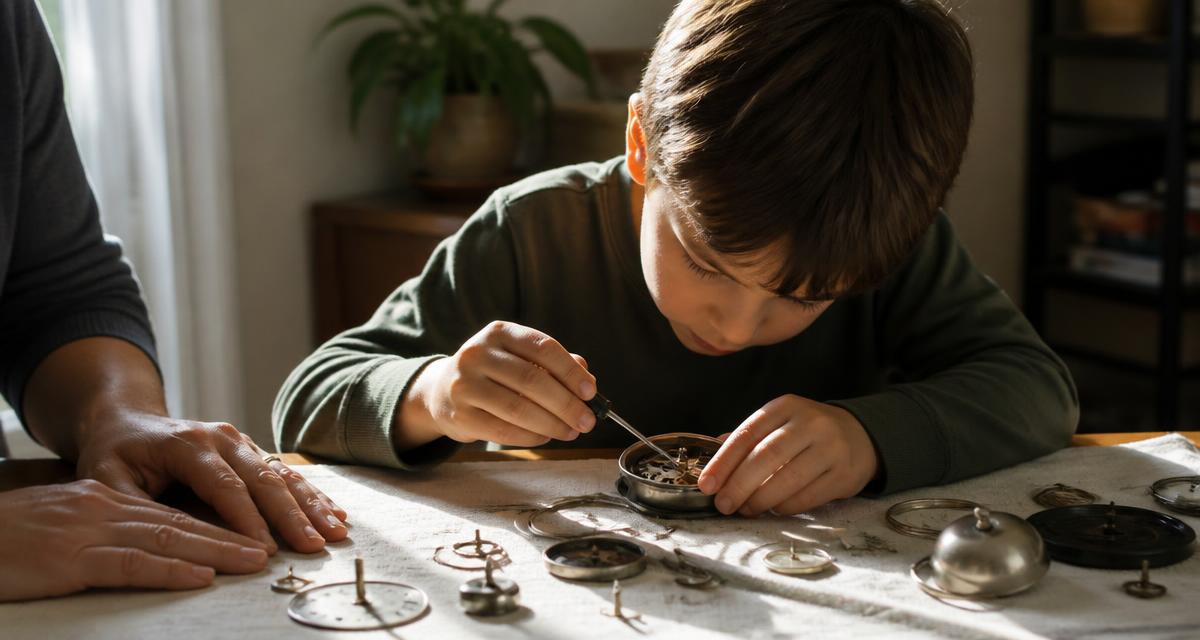
An old clock, a broken remote, a thrift-store radio. Disassembly is the cheapest curiosity lesson there is: things have insides, insides have reasons, and you're allowed to look.
3. Praise the process, never the ceiling
"You're so smart" sounds generous and lands as pressure — it makes hard work feel like evidence against the compliment. Swap it for "you kept going after that got hard," which is both truer and repeatable. That's the same engine behind the power of "yet".
4. Let them see you learning badly
Be visibly mediocre at something in front of your kids — a language, an instrument, a repair. Children who only see adults being competent conclude that competence is a fixed trait they either got or didn't.
5. Protect one unstructured hour
Deep interests need slack. A week with no gap in it produces a child who is busy and incurious. One protected, unscheduled hour is where most of the good obsessions start.
Better questions than "how was school?"
- "What did you get wrong today, and what happened next?"
- "What's something your teacher said that you're not sure about?"
- "What would you want to learn if nobody was grading it?"
Pair them with a routine your child owns — the daily checklist includes a "learned something new" line and a SMART goal box, which turns vague ambition into something a nine-year-old can actually finish.
Common questions about raising a curious kid
How do I raise a curious child?
Protect the questions. A child who gets a real answer — or an honest 'I don't know, let's find out' — asks more. A child whose questions are treated as interruptions learns to stop asking within a couple of years.
Should I praise my child for good grades?
Praise the process that produced them: the studying, the redo, the asking for help. Praising the grade itself teaches kids to protect the grade, which usually means choosing easier work.
What if my child is only interested in one narrow thing?
That's not a problem, it's a doorway. Depth in one subject teaches the actual skill — how to get good at something hard — and that skill transfers even when the subject doesn't.
How do I get my kid to read more?
Let them read things you don't respect. Comics, joke books, game manuals, football stats. Reading volume drives reading skill; taste comes later and mostly by itself.
What's a good question to ask instead of 'how was school?'
Try 'what did you get wrong today, and what happened next?' It normalises mistakes as information rather than verdicts, and it usually gets an actual answer.