Grit · 7 min read
Published
Stoicism for Kids: Marcus Aurelius, Epictetus and Seneca
Stoicism for kids sounds like a stretch until you hear the idea: two thousand years ago an emperor, a former slave, and a playwright all reached the same conclusion about how to live — you control your response, and almost nothing else. It is the most useful idea you can hand a child, and it fits on an index card.
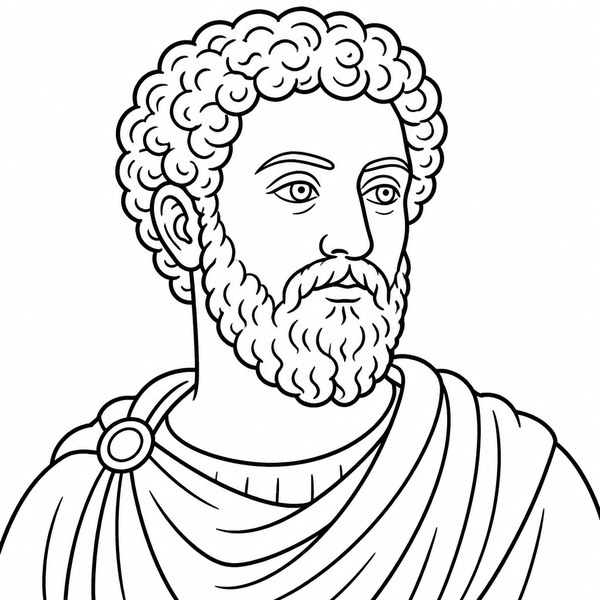
What was Stoicism, actually?
Stoicism began in Athens around 300 BC, when a merchant named Zeno lost his cargo in a shipwreck, wandered into a bookshop, and started teaching on a painted porch — the stoa that gave the school its name. It spread to Rome and became the practical philosophy of soldiers, senators, and slaves alike.
Despite the modern meaning of “stoic,” it was never about hiding feelings. It was about three habits: telling the difference between what is up to you and what isn't, choosing your response on purpose, and behaving decently toward other people because we are all in this together. Modern cognitive behavioural therapy borrowed heavily from it — which is why it works so well on eight-year-olds.
The three you should know
Marcus Aurelius
Roman emperor · 121–180 AD
He ran the largest empire on earth while fighting wars on the frontier and living through a plague. Every night he wrote short, plain notes to himself about staying calm and being fair. Those notes were never meant for us — they became the book Meditations, still read almost two thousand years later.
“You have power over your mind — not outside events. Realize this, and you will find strength.”Print the Marcus Aurelius coloring page
Epictetus
Teacher, born enslaved · 50–135 AD
Epictetus was born a slave and walked with a limp his whole life. He studied philosophy while still enslaved, and once freed he opened a school and taught for the rest of his days. His whole teaching fits in one sentence a child can hold onto: you don't choose what happens, you choose what you do next.
“It is not what happens to you, but how you react to it that matters.”Print the Epictetus coloring page
Seneca
Playwright & advisor · 4 BC–65 AD
Seneca was a writer and advisor to emperors who was exiled, recalled, and eventually forced out of public life. He wrote letters to a friend about time, worry, and gratitude — and one line in them is the best anti-anxiety sentence ever handed to a nervous kid.
“We suffer more often in imagination than in reality.”
Five Stoic lessons kids can actually use
1. Sort the world into two piles
Stoics start every problem the same way: what part of this is mine, and what part isn't? The weather, the referee, another kid's mood — not yours. Your effort, your words, your next move — yours. Kids who learn this split argue less with reality and spend more energy on the part they can actually change.
Try tonight: Ask at dinner: “What was one thing today you couldn't control? What did you do with the part you could?”
2. The gap between what happens and what you do
Epictetus taught that events are neutral until we judge them. A missed goal is a fact; “I'm terrible at this” is a story added on top. Naming that gap gives a child a place to stand when something goes wrong — a pause instead of a meltdown.
Try tonight: Name the fact out loud, then the story: “The fact is you missed the shot. The story is you're bad at soccer. Which one is true?”
3. Worry is usually a rehearsal
Seneca noticed that most of what we dread never happens — we just live through it in advance. For kids, this reframes bedtime anxiety brilliantly: the scary thing is happening in imagination, not in the room.
Try tonight: Ask: “Is this happening right now, or is it happening in your head?” Then write the worry down and check it tomorrow.
4. Character beats applause
Marcus could have anything he wanted and reminded himself daily not to want much of it. Stoics measure a day by how they behaved, not by how it went. That's a quietly radical idea for kids raised on scoreboards, grades, and likes.
Try tonight: Swap “Did you win?” for “Were you the kind of teammate you want to be?”
5. Do the next small thing
Stoicism isn't about feeling nothing — it's about acting well while you feel plenty. When a task looks huge, the Stoic move is to shrink it to the very next action and take it.
Try tonight: Pair it with a one-line goal on the daily checklist: I will ______, by ______ o'clock.
Four Stoic lines worth memorising
- “Waste no more time arguing what a good man should be. Be one.” — Marcus Aurelius
- “No man is free who is not master of himself.” — Epictetus
- “We suffer more often in imagination than in reality.” — Seneca
- “First say to yourself what you would be; then do what you have to do.” — Epictetus
Stoicism for kids: common questions
- What is Stoicism in simple terms for kids?
- Stoicism is a 2,300-year-old way of thinking that says you cannot control what happens to you, only what you do next. For kids it comes down to three habits: sort what is yours from what isn't, choose your reaction on purpose, and treat people well.
- What age can children learn Stoic ideas?
- Most children can use the core idea — the difference between what you control and what you don't — from about age six. Older kids, roughly nine and up, can handle the quotes and journaling prompts from Marcus Aurelius and Epictetus directly.
- Who are the three most important Stoic philosophers?
- Marcus Aurelius, the Roman emperor who wrote Meditations; Epictetus, a teacher born enslaved; and Seneca, a playwright and advisor to emperors. Between them they cover self-control, resilience, and worry.
- Is Stoicism about hiding your feelings?
- No. Being 'stoic' in everyday speech means showing no emotion, but the philosophy is about feeling things fully and still acting well. Modern cognitive behavioural therapy borrows directly from Stoic practice.
- How can we practise Stoicism at home?
- Use one question at dinner — 'What was one thing today you couldn't control, and what did you do with the part you could?' — then pair it with a written one-line goal and a short evening reflection.
Make it something they can hold
Kids remember ideas they have coloured. Print the two Stoic pages — each one has the portrait, the quote, a short kid-friendly bio, and lines for writing what the words mean to them.
Or browse all the coloring pages, build the habit with the daily checklist, or read The Power of Yet.