The Confidence Ladder: How to Build Real Confidence in Kids
You can't talk a child into confidence. You've probably tried — the car-park pep talk, the "you'll be great!", the slightly desperate thumbs-up. It doesn't work because confidence isn't a belief. It's a memory of having coped. Your job is to help them collect some.
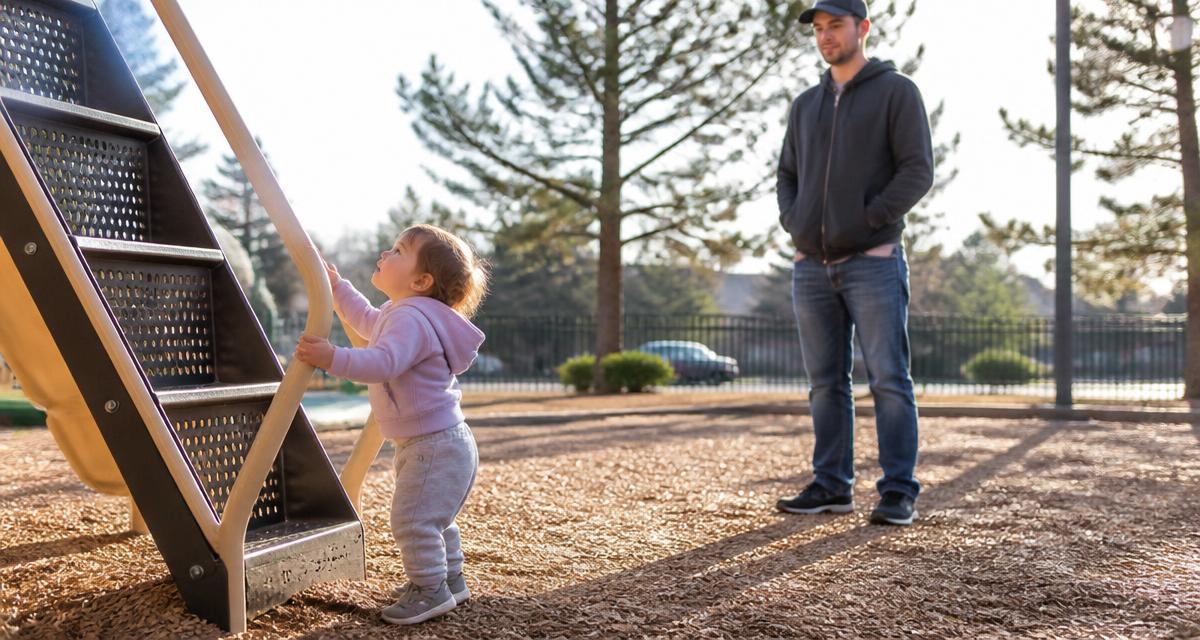
Why pep talks don't stick
"You're amazing" asks a child to take your word over their own evidence, and they won't. Worse, sweeping praise raises the cost of failing — now they're letting down your description of them, not just missing a goal. Children believe what they've done, in the order they did it.
Build the ladder
Pick one thing your child avoids: ordering food, phoning a friend, reading aloud, joining a game already in progress. Then write six versions of it, easiest to hardest. A generic ladder looks like this:
- Watch me do it once.
- Do it with me, my hands on it too.
- Do it with me next to you, saying nothing.
- Do it with me in the room.
- Do it while I wait outside.
- Do it and tell me about it after.
One rung per week is fast. One rung per fortnight is normal. The rule that matters: your child chooses when to climb, and the rung is never more than slightly uncomfortable. Terrified means the step is too big — split it in half.
What to say at each rung
- Before: "You'll probably feel nervous. That's the part everyone feels — it doesn't mean stop."
- During: nothing. Rescuing is the most common way a rung gets wasted.
- After: name the evidence. "You were nervous and you did it anyway. Write that down." Not "see, that was easy!" — which deletes the achievement.
When they fall off
They will. A rung goes badly, the friend says no, the reading-aloud turn gets laughed at. Don't retire the ladder and don't rerun it the next day. Go back one rung, do the easier version once, then re-attempt. What you're teaching in that week isn't the skill — it's that a bad day is a data point, not a verdict. That's grit, and it's the same muscle behind what the Stoics taught kids about control.
Keep the evidence somewhere visible. The daily checklist has a "did one brave thing" line, and our 100 printable affirmation cards include a confidence set written to be said out loud before a rung, not after.
Common questions about building confidence in kids
How do you build confidence in a child?
With evidence, in small steps. Confidence is a memory of having coped, so the job is to arrange a series of manageable challenges your child completes mostly on their own, then point the memory out afterwards.
Does telling my child they're amazing build confidence?
Not much. Global praise is easy to disbelieve and impossible to act on. Specific, accurate feedback about something they did — 'you asked the waiter yourself, that was the hard part' — sticks because they were there for it.
What is a confidence ladder?
A list of versions of the same challenge, ordered from easiest to hardest, that a child climbs one rung at a time. For ordering food, it might run from choosing silently, to saying thank you, to ordering the whole meal alone.
What if my child refuses the next step?
The rung is too big. Split it in half rather than pushing — a refused step teaches avoidance, a completed small step teaches capability. Progress in shy children is measured in fortnights, not evenings.
How is confidence different from self-esteem?
Self-esteem is how a child feels about themselves; confidence is what they expect to be able to do. Confidence is the one you can build deliberately, and it tends to pull self-esteem up behind it.